
TL;DR:
- Fans engage most with multimedia and serialized experiences that provide authentic access to an artist’s creative world. A minimum of three visuals, including a hero video, Spotify Canvas, and short clips, is essential for modern music release visibility. Serialized content deepens fan loyalty by offering ongoing stories and behind-the-scenes insights that foster stronger emotional connections.
The best music content formats for fans are multimedia and serialized experiences that provide consistent, authentic access to an artist’s creative world. A single polished music video no longer satisfies the modern fan’s appetite for connection. Formats like hero music videos, short-form vertical clips, lyric videos, and episodic behind-the-scenes content each serve a distinct role in how fans discover, absorb, and emotionally attach to music. Artists like Morgan Harris, who blend dance-pop, disco, and personal storytelling, demonstrate how a thoughtful content architecture can turn a single release into an ongoing conversation with listeners.

1. What are the best music content formats for fans?
The most effective formats combine visual storytelling, platform-native delivery, and emotional access. A complete release kit contains seven distinct assets: a hero music video, Spotify Canvas, lyric video, two short-form cuts, cover art, and a pre-save graphic. Each asset reaches fans on a different platform and serves a different stage of discovery. The hero video builds narrative identity, while the Canvas loops silently on Spotify, reinforcing the song’s mood during passive listening.
Fans encounter music across YouTube, TikTok, Spotify, and Instagram simultaneously. A release that appears on only one platform loses ground to artists who show up everywhere at once. The minimum viable release in 2026 requires at least three visuals to achieve meaningful visibility. That threshold reflects how fragmented fan attention has become across platforms.
2. What is a modern music release content kit?
A release content kit is the full set of visual and multimedia assets an artist deploys around a single song or project. The seven-asset standard has become the practical benchmark for independent artists aiming to compete for fan attention at scale.
The assets and their platform roles break down as follows:
| Asset | Primary Platform | Fan Function |
|---|---|---|
| Hero music video | YouTube | Narrative identity, long-form discovery |
| Spotify Canvas | Spotify | Mood reinforcement during streaming |
| Lyric video | YouTube, TikTok | Text-driven engagement, singalong culture |
| Short-form cut 1 | TikTok, Instagram Reels | Hook-first discovery |
| Short-form cut 2 | YouTube Shorts | Secondary viral surface |
| Cover art | All platforms | Visual brand anchor |
| Pre-save graphic | Instagram, X | Pre-release anticipation |
Lyric videos perform particularly well on TikTok and YouTube because they invite participation. Fans quote lyrics in comments, create reaction content, and use lyric clips as overlays for their own videos. That participatory layer extends a song’s reach far beyond the original upload.
Pro Tip: Edit your lyric video so the most emotionally resonant line appears in the first eight seconds. That moment is what fans screenshot and share.
3. How do short-form video formats drive fan engagement?
Short-form video is projected to drive 82% of internet traffic by 2026. That figure signals a fundamental shift in how fans consume and share music, not a passing trend. The recommended view-through rate target for YouTube Shorts is 65%, meaning the majority of viewers should watch to the end. Clips that miss that threshold rarely surface in algorithmic recommendations.
The most effective short-form music clips share several characteristics:
- A standalone hook in the first 3–5 seconds that requires no prior context
- A visual element that complements the sonic mood rather than simply showing a performance
- A length of 15–30 seconds that respects the platform’s native scroll behavior
- A clear emotional or narrative payoff that rewards watching through
Staggered release strategies amplify short-form impact. Releasing a teaser clip two weeks before a single drops, followed by a hook clip on release day, and then a behind-the-scenes clip the following week, creates multiple discovery windows. Each window catches a different segment of the fan base at a different moment of readiness.
Pro Tip: Post your short-form clips natively to each platform rather than cross-posting. TikTok and Instagram Reels penalize content with visible watermarks from other apps.
User-generated content, or UGC, is the organic multiplier that short-form formats enable. When fans recreate a clip, lip-sync to a hook, or use a song as the audio for their own content, the artist’s reach expands without additional production cost. Songs with adaptable hooks and sonic fingerprints generate the most UGC activity.
4. What role does serialized content play in fan connection?
Serialized content is the practice of releasing music-related material in episodic installments, each building on the last to create a narrative arc. Episodic releases like track deep-dives, studio sessions, and fan theory reaction videos keep engagement consistent between official releases. They satisfy what might be called a narrative addiction: the same instinct that keeps fans returning to a television series week after week.
The formats that work best within a serialized structure include:
- Studio session clips showing the writing and production process
- Track deep-dives where the artist explains lyrical decisions and sonic choices
- Fan theory reaction videos that acknowledge and reward close listening
- Live Q&A sessions tied to a release milestone or anniversary
“Fans want personality, context, and access.” That observation, drawn from research into what fans actually want in 2026, captures why serialized content outperforms polished one-offs in building loyalty.
Community platforms like Patreon and Discord extend serialized content into two-way relationships. Subscriber-only content, early access to demos, and watch parties create a sense of belonging that a public music video cannot replicate. Morgan Harris’s approach to personal storytelling in songs like Blues In The Summertime reflects the same instinct: the creative process behind the song becomes as meaningful to fans as the finished recording.
Pro Tip: Maintain a posting cadence of 3–5 times per week for serialized content to sustain algorithmic momentum and fan retention.
Interactive album launches on YouTube combine episodic content, UGC campaigns, watch parties, and live Q&A into a single campaign architecture. Monetization within that structure can mix ad revenue, ticketed streams, memberships, and merchandise drops. The result is a fan pipeline that generates income while deepening emotional investment.
5. How do audio file formats affect the fan listening experience?
Audio file formats shape how fans hear music, and the differences matter more than most casual listeners realize. The three formats that define the fan experience spectrum are WAV, AAC, and FLAC.
WAV at 24-bit/44.1 kHz is the studio standard. It preserves every detail of a recording but produces large files that are impractical for streaming. AAC at 256 kbps is the recommended streaming format because it balances audio quality with manageable file size. FLAC offers lossless compression, reducing file size by 40–60% compared to WAV while preserving full audio fidelity. That combination makes FLAC the preferred format for audiophile fans who want archival quality without the storage burden of uncompressed files.
Fan preferences divide along predictable lines. Casual listeners on streaming platforms rarely notice the difference between AAC and FLAC. Audiophile fans, however, treat high-resolution downloads as a form of deeper engagement with the music. Offering FLAC downloads alongside streaming access signals respect for that segment of the fan base.
6. What makes music content formats popular and shareable?
Shareability is not accidental. Music that generates significant UGC has standalone high-impact hooks in the first 15–30 seconds, with what researchers describe as “blank-canvas energy.” That phrase captures a specific quality: the song works as a soundtrack for vastly different types of content without losing its identity. A track about self-discovery can underpin a fitness video, a travel montage, or a heartbreak story with equal conviction.
The elements that consistently produce shareable content include:
- A sonic fingerprint that is recognizable within three seconds
- Lyrical hooks that are quotable without full context
- Visual content that leaves interpretive space for fan creativity
- A clear emotional register that fans can map onto their own experiences
Creating a trend brief alongside a release helps fans understand how to use the music in their own content. A trend brief is a short document or video that shows three or four ways the song could be used as a soundtrack, paired with suggested visual styles. Artists who provide this kind of creative scaffolding see higher UGC participation than those who release music without guidance.
Fan incentives accelerate participation. Shoutouts, early access to new material, and inclusion in official playlists reward fans who create content around a release. Those incentives transform passive listeners into active collaborators, which is the most durable form of fan engagement available.
Key takeaways
The most effective music content formats for fans combine platform-native visuals, serialized storytelling, and audio quality that respects the full range of listener preferences.
| Point | Details |
|---|---|
| Seven-asset release kit | A complete release includes hero video, Canvas, lyric video, two short-form cuts, cover art, and pre-save graphic. |
| Short-form video dominance | Short-form content is projected to drive 82% of internet traffic by 2026, making it the primary discovery channel. |
| Serialized content builds loyalty | Episodic formats like studio sessions and live Q&As satisfy narrative instincts and convert listeners into subscribers. |
| Audio format matters | FLAC reduces file size by 40–60% versus WAV while preserving lossless quality for audiophile fans. |
| Blank-canvas hooks drive UGC | Songs with adaptable, standalone hooks generate the most user-generated content and organic reach. |
The architecture of connection: a perspective on music content in 2026
What strikes me most about the current music content environment is how thoroughly it has inverted the old hierarchy of effort. For decades, the finished recording was the artifact that mattered. Everything else, the interview, the tour, the music video, existed to serve it. That relationship has quietly reversed. The song is now often the entry point rather than the destination.
Fans in 2026 do not simply want to hear music. They want to inhabit it. They want to understand why a lyric landed the way it did, what the studio sounded like at 2 a.m. when the chorus finally clicked, and what the artist was carrying emotionally when the track was written. Serialized content answers those questions in ways a finished recording never can. The artists who understand this are building something closer to a literary relationship with their audience than a traditional music career.
What I find genuinely interesting, and somewhat underappreciated, is the technical dimension of this shift. Posting cadence, audio format choices, and view-through rate optimization are not purely commercial concerns. They are the infrastructure of intimacy. A fan who cannot find your Canvas on Spotify or whose slow connection buffers your lyric video has been quietly excluded from the experience you intended. That exclusion is invisible to the artist and felt acutely by the fan.
The artists who will define the next five years are those who treat content architecture with the same seriousness they bring to songwriting. Morgan Harris’s blend of dance-pop craft and personal narrative instinct positions him well for exactly this moment. The emotional specificity in releases like XXI and Disco Heaven gives serialized content something real to orbit. Without that core, episodic content becomes noise. With it, every behind-the-scenes clip becomes a window into something worth watching.
— Luca Bennett
Morgan Harris and the formats that bring music to life
Morgan Harris builds his releases around the same content principles this article examines. His official videos, from the club-facing energy of XXI to the reflective warmth of Blues In The Summertime, demonstrate how a single song can sustain multiple content formats without losing its emotional center.
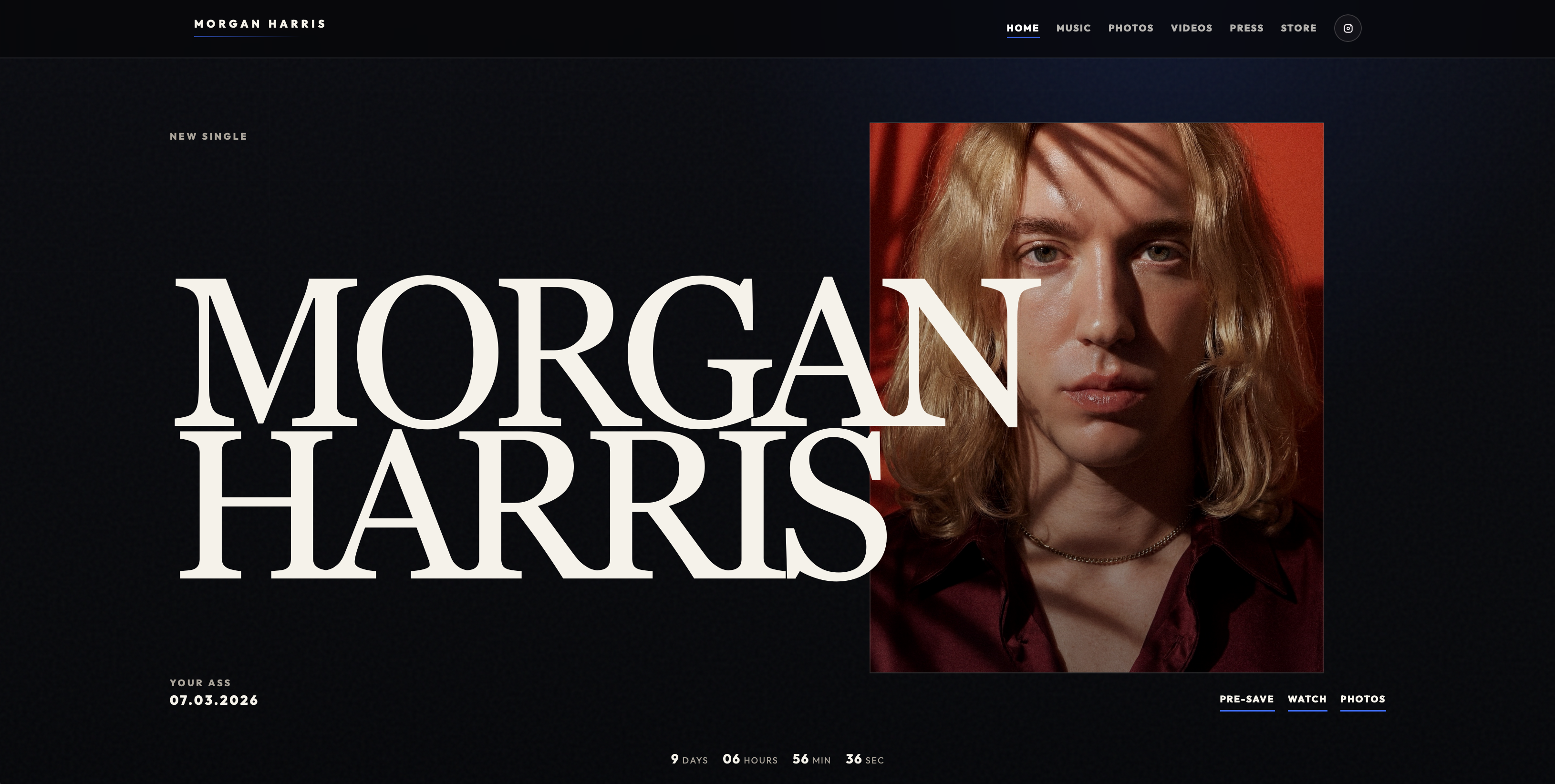
Fans looking to experience those formats firsthand can visit the official Morgan Harris profile, which collects his music, videos, and release history in one place. His video catalog spans the full range of formats discussed here, from hero visuals to short-form cuts, offering a clear example of how dance-pop and disco-house storytelling translates across platforms. For fans who want to follow his catalog as it grows, his full discography tracks every release from Pictures Back forward.
FAQ
What are the best music content formats for fan engagement?
The most effective formats are hero music videos, short-form clips, lyric videos, and serialized episodic content. Each format serves a distinct discovery or loyalty function across platforms like YouTube, TikTok, and Spotify.
How many visuals does a music release need in 2026?
A release requires a minimum of three visuals, specifically a hero video, Spotify Canvas, and one short-form clip, to achieve meaningful platform visibility. A complete release kit contains seven assets.
Why does serialized content build stronger fan loyalty than single releases?
Serialized content satisfies fans’ desire for ongoing access and context, converting passive listeners into active subscribers. Episodic formats like studio sessions and live Q&As create narrative arcs that keep fans engaged between official releases.
What audio format is best for streaming versus archival listening?
AAC at 256 kbps is the recommended format for streaming due to its balance of quality and file size. FLAC is the preferred choice for audiophile fans who want lossless quality with 40–60% smaller files than WAV.
What makes a song generate user-generated content?
Songs that generate strong UGC have standalone hooks in the first 15–30 seconds and a blank-canvas quality that allows fans to use the track as a soundtrack for diverse types of content.